
The Man Behind the Mic: How Mike Joy got into Motorsports Journalism and Broadcasting, and advice he has for future Sportscasters

If you are a longtime NASCAR fan, you have probably heard of NASCAR on FOX Sports Lead Announcer Mike Joy. He has been on the call for many of the most memorable moments in NASCAR history, like Dale Earnhardt winning the 1998 Daytona 500 after 20 years of trying and 20 years of frustration.
During my junior year at Benedictine College, I spoke to Mike Joy, the current voice of NASCAR on FOX Sports and many other networks over the past almost 50 years, on my QDOG Sports Network podcast over Zoom.
During the conversation, we discussed the evolution of NASCAR broadcasting on TV, where the sport stands today in terms of growth and overall popularity, and how Joy got started in NASCAR broadcasting.
“ I got started doing public address at local racetracks while I was about your age, while I was still in college, and managed to turn that into working five nights a week all around the northeast,” Joy said.
His announcing at those local tracks later caught the attention of the Motor Racing Network in Daytona Beach, Florida. They hired him as a full-time broadcast director and a turn (play-by-play) announcer in 1977, and later, he would get the radio anchor position for the radio network.
“I also tried other ventures in the automotive field and helped run the radio network as an announcer or pit reporter, well, until television beckoned in about 1983 or so,” said Joy.
During his stint at the Motor Racing Network (MRN), Joy worked with a well-known team of announcers and analysts, including Barney Hall, Eli Gold, and Jerry Punch, a longtime NASCAR pit reporter and medical doctor who later became a sports reporter for ESPN.
After 1983, Joy would work for various major networks as a pit reporter and full-race announcer for NASCAR races. Not until after the 1997 NASCAR season ended would Joy get his big break in the industry for big network primetime NASCAR race broadcasting. This breakout in the NASCAR industry started when legendary former NASCAR lead announcer for CBS Sports, Ken Squier, moved from the lead announcer role to pre- and post-race studio host for the network’s NASCAR Cup Series coverage, and Joy was named lead NASCAR race Announcer for CBS.
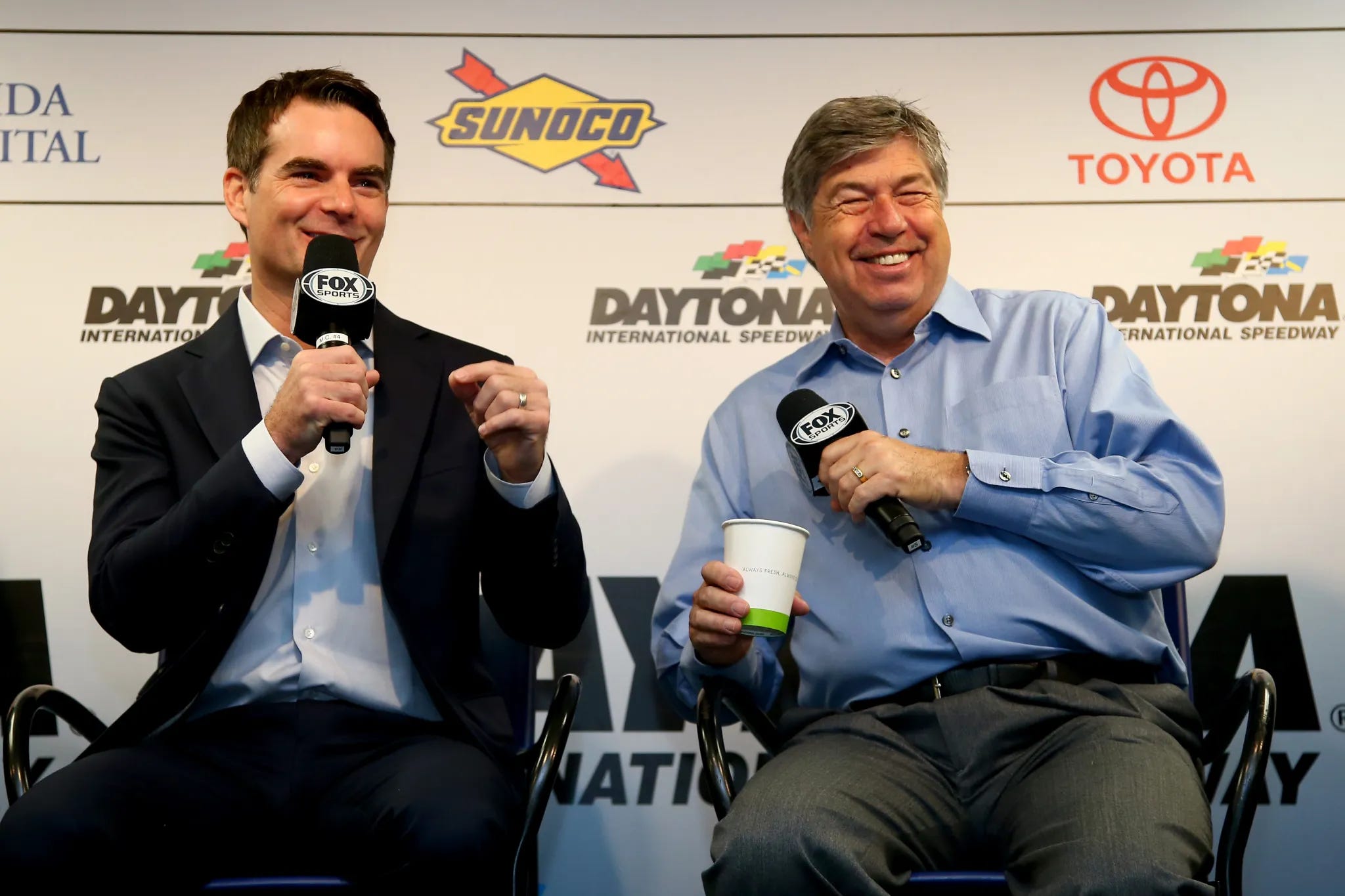
List of radio or television Networks Mike Joy has broadcast motorsports and NASCAR races for:
TNN (The Nashville Network), now known as Paramount Network
ESPN for the 1981 Atlanta Journal 500
FOX Sports (2001-present)
Turner Sports/TBS Network as a pre-race show host
Advice Joy would give to future motorsports or sports broadcasters
When I asked Joy for advice for a future sportscaster or broadcaster, Joy referred back to a quote attributed to Larry King and Mark Twain: “ I never learned anything when I was talking; listening is an art.”
He means that in broadcasting, silence is okay occasionally, and listening is essential because these things can help you learn more about the sport or news event you are covering. When you listen and let things happen as they will, you will gain more knowledge or learn something you never knew before.
Another key piece of advice Joy gave during the conversation is that live sports on television is not radio with pictures. Sometimes you just gotta let the action of the sport or motorsports, and what’s happening in the moment, do the talking. Viewers of sports on television can see most of what is going on live at the event themselves and don’t need to be told what’s happening with the whole team.
“As a pit reporter, you must take your comments and compress them into relatively brief reports, so you don’t step on the action or stray too far from it. What’s happening on the field or on the track, while in the anchor’s seat, you are responsible for the viewers’ understanding of the race or action as it unfolds which means integrating pit reports and getting your analysts involved both in detail and in overview and sometimes reset the telecast so those that are just starting to watch at the time or recently tuned back in know what they missed”, he said.
He talked about how you don’t want viewers to tune into the race from another channel and have lingering questions about what’s happening now in the NASCAR race or other live sports television broadcasts.
Joy on the Evolutions of NASCAR Broadcasting from when he started to Today’s NASCAR broadcasts
“When I was doing radio in the early 80s, as well as my time announcing live races for TNN (now Paramount Network), to pit reporting for CBS Sports, there was no live race scoring given to the booth or to the home, “Joy said.
In the 1980s and early to mid-90s, NASCAR still used manual scoring to track drivers’ positions on the leaderboard for live race coverage. Each driver was given a different scorer with a clipboard. The media and broadcast teams would receive updates on leaders to share with viewers or listeners every 10 laps.
This manual score tracking happened every time a driver and their race car passed by the scoring stand during the race, and the scorer was supposed to write the time, lap leader numbers, and other stats on a grid paper to send to the booth.
Car numbers would be on the back of each driver’s scoring paper on those clipboards, and the NASCAR chief scorer would write down the order in which the scoring clipboards were held up. That’s how the manual scoring was handled.
Both radio and television had to deal with this, as did the chyron machine that made the fonts people saw on their news or sports broadcasts at the top or bottom of their screens; it was also manually operated.
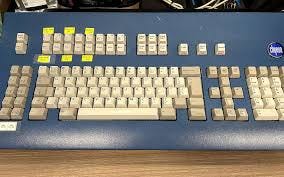
The chyron machine was mostly used back in the day as the NASCAR race broadcast was heading into an ad break.
“So when the broadcast director said we are ready for a break, the chyron machine operator would put up the font of the top first few leaders of the race with the driver’s name and car number at the time before the ad break would start,” said Joy.
“Sometimes the operator would get three and sometimes more, and when the operator heard the chyron ready, they would put up the summary chyron leaderboard over the video of the race broadcast as the network was heading to break, and that’s all the scoring that would be given until the end of the race,” he said.
Once tech evolved and NASCAR started using GPS, which was invented by the military, scoring became much easier for everybody involved, so computers were making the fonts for broadcasts and digital scoring. The digital scoring era, which is still happening today, began in 2004 when Nextel became the Cup Series entitlement sponsor, a role they held until 2008, when Sprint bought out Nextel. They then renewed with NASCAR under the Sprint Cup name, not Nextel branding, which lasted from 2008 to 2016.
My Final Thoughts on the Conversation, one year after it was uploaded
Having this recorded Zoom video conversation with Joy was one I’ll always remember, like many of the other video interviews I have done since I started QDOG Sports Network and Podcast. I always enjoy watching him broadcast and call NASCAR races on FOX Sports. Watching him on TV on FOX and FS1 (which used to be the Speed Channel) is what got me into NASCAR in the first place back in my younger years.
When someone asks me what my dream job is or whose job I’d love to have someday, it would have to be the lead announcer for the NASCAR Cup Series on FOX Sports, the job he has.
Thank you, statement to Mike Joy from me:
“Thanks for the amazing conversation you had with me on my small network and coming on my show via Zoom, even though my show isn’t the biggest one out there, since I’m working on audience growth today. Your advice has stuck with me still to this day. Thanks for all you do for NASCAR/Motorsports broadcasting and the way you present the sport nationwide on TV and across the mass media spectrum.”